

Harbor Breeze ceiling fans have been a popular fixture in many American homes for years, often chosen from Lowe’s for their blend of accessible style and reliable cooling. Many homeowners have older Harbor Breeze models that, despite potentially being “discontinued” – meaning they are no longer sold new and active manufacturer support is limited – are still functioning well or could continue to do so with a little maintenance or repair.
However, owning a discontinued ceiling fan, especially a store brand like Harbor Breeze, presents unique challenges. Finding accurate installation manuals, troubleshooting information specific to your model, or, most significantly, locating exact replacement parts can become a frustrating scavenger hunt. Unlike major independent brands that might maintain parts inventory for longer periods, store brands often have shorter product cycles and limited post-sale parts support once a model leaves the shelves.
This comprehensive guide is designed specifically for owners of older or discontinued Harbor Breeze ceiling fans. Our goal is to provide practical strategies and realistic expectations to help you:
- Identify your specific fan model.
- Locate instruction manuals or wiring diagrams if possible.
- Understand common issues that arise with aging fans.
- Navigate the complexities of finding replacement parts – distinguishing between readily available generic components and hard-to-find model-specific ones.
- Source compatible universal parts effectively.
- Make an informed decision about repairing your older fan versus replacing it entirely.
Safety Reminder: Working on ceiling fans involves electricity. Always turn off power at the circuit breaker and verify it’s off with a voltage tester before opening any housing or touching wires. If unsure about any electrical work, hire a qualified electrician.
Why Identifying Your Discontinued Model is Important
The single most important piece of information you need when dealing with an older or discontinued Harbor Breeze fan is its exact Model Number. This number is the key to unlocking any available information or potential parts.
- Where to Find It: Look for a specification sticker adhered directly to the top of the fan’s motor housing. You’ll likely need a stable ladder and good lighting to view it. It might also be listed on your original purchase receipt or the fan’s box if you still have them.
- Why It Matters (Especially for Discontinued Fans):
- Manual Search: It’s essential for searching effectively online for a potential instruction manual PDF (see next section).
- Parts Search: While official OEM parts are rare, searching online marketplaces like eBay for used or salvage parts (blades, arms, globes, hardware) using the specific model number is often the only way to find model-specific components.
- Compatibility Checks: When considering universal replacement parts (remotes, capacitors, some light kits), product listings sometimes mention specific fan models they are compatible with. Knowing your number allows you to check these lists.
- Online Help: If seeking advice on forums or from parts suppliers, providing the model number is critical for others to offer relevant help.
Without the model number, identifying compatible parts or finding relevant information for a discontinued fan becomes extremely difficult guesswork.
Locating Manuals for Older or Discontinued Harbor Breeze Fans: Strategies & Challenges
The instruction manual is invaluable for wiring diagrams, original parts lists, and installation specifics. However, finding manuals for discontinued store-brand fans can be challenging.
- The Difficulty: Lowe’s, as the primary retailer, doesn’t typically maintain an easily accessible, comprehensive online archive of manuals for all past Harbor Breeze models, especially older ones. Links on old product pages may become broken over time.
- Effective Search Strategies:
- Try Lowes.com First: Despite the challenge, it’s worth trying. Go to Lowes.com and use the search bar, entering your fan’s exact Model Number. Check any resulting product pages (even if listed as unavailable) or search their customer service/help sections for manual links or support documentation lookup tools. Success is more likely for recently discontinued models.
- Use General Search Engines: Employ Google, Bing, etc., using very specific search terms. Try various combinations:
- “Harbor Breeze [Model Number] manual PDF”
- “Harbor Breeze [Model Number] instructions”
- “Harbor Breeze [Model Number] wiring diagram”
- This often uncovers manuals shared on DIY forums, personal blogs, or third-party manual archive sites (exercise caution with downloads from unfamiliar non-official sources).
- Check Online Fan Forums: Websites dedicated to ceiling fans or home improvement (like certain subreddits or dedicated forums) may have archives or members who have shared manuals for specific older models. Search their archives or post a request with your model number.
- Set Realistic Expectations: Be persistent in your search, but understand that for some older, less popular discontinued models, the original manual may simply no longer be available online.
Common Issues Encountered with Older & Discontinued Fans
As ceiling fans age, certain components are more prone to wear and failure. These issues are common across brands but finding parts for discontinued Harbor Breeze models adds complexity. Typical age-related problems include:
- Capacitor Failure: Extremely common in older AC motor fans. Symptoms include the fan running slow, humming but not starting, needing a manual push to start, or losing specific speed settings. (Often fixable with generic parts).
- Remote Control / Receiver Failure: Handheld remotes get lost, broken, or wear out. The electronic receiver unit inside the fan canopy can also fail with age or due to power surges. (Usually requires a universal kit).
- Increased Noise:
- Grinding/Scraping: Often indicates worn-out motor bearings – typically signals the end of the motor’s life.
- Humming: Can be normal low-level AC hum, but louder humming often points to a failing capacitor or issues with an incompatible wall dimmer switch.
- Clicking/Rattling: Usually loose screws (blades, arms, light kit, canopy) or wire nuts rattling inside housings. (Often easily fixable if accessible).
- Wobbling: Can worsen over time as blades warp slightly with age/humidity, blade arms loosen or bend under stress, or initial imbalances become more pronounced.
- Light Kit Problems: Bulb sockets can corrode or fail; pull chain switches wear out; plastic globes/shades become yellowed and brittle; wiring connections loosen.
- Cosmetic Wear: Finishes may tarnish, peel, or fade; plastic parts can become brittle or discolored.
Understanding these common failure points helps focus troubleshooting efforts, especially when deciding if a repair is feasible given parts availability.
The Parts Puzzle: Sourcing Replacements for Discontinued Harbor Breeze Models
This is often the biggest hurdle for owners of discontinued fans. Here’s the reality:
- The Store Brand Challenge: Harbor Breeze is a Lowe’s store brand. Unlike independent manufacturers who might support parts for longer, store brands often have shorter product cycles tied to retail trends. Once Lowe’s stops selling a specific Harbor Breeze model, dedicated support and the supply of unique replacement parts typically diminish very quickly. There isn’t a separate “Harbor Breeze corporation” manufacturing and stocking old parts indefinitely.
- Official OEM Parts: Finding new Original Equipment Manufacturer parts specifically made for your discontinued Harbor Breeze model through official channels (like Lowe’s customer support) is highly unlikely for all but perhaps the most recently dropped models. They simply don’t maintain extensive inventory of old, model-specific components.
- Universal Compatible Parts – The Key: For many functional repairs, relying on universal parts designed to work across multiple brands (if compatible) is the most practical approach.
- Used / Salvage Parts – The Last Resort: For cosmetic or highly model-specific mechanical parts (like uniquely shaped blades, arms, motor housings, canopies), the only realistic source is often the used parts market, primarily eBay.com. Searching for your exact fan model number might reveal sellers parting out identical fans. This requires patience, luck, and careful inspection of used part condition.
Focus: Finding Compatible Universal Parts (When OEM is Gone)
Let’s look at common replacement needs and the feasibility of using universal parts for your discontinued Harbor Breeze fan:
Capacitors (High Success Rate):
- Why it Works: Capacitors are standardized electronic components defined by their specs, not their brand.
- How: As covered previously, safely access your old capacitor (Power OFF!), record the exact µF ratings and Voltage (V) printed on it. Search online (Amazon.com, eBay, electronic supply sites) for a generic ceiling fan capacitor matching those specs precisely. This is usually an easy and inexpensive fix for many motor performance issues.
Pull Chain Switches (High Success Rate):
- Why it Works: Fan speed and light pull chain switches are also relatively standard internally.
- How: Identify the switch type needed (e.g., 3-speed fan switch, light ON/OFF switch) and the number of wires it uses. Purchase a generic replacement switch matching that function (widely available online and in US hardware stores). Power OFF, carefully note how the old switch was wired, and connect the new one identically.
Remote Control/Receiver Kits (Good Success Rate with Matched Kits):
- Why it Works: While finding just the original remote is hard, many universal kits (containing a new remote and a new receiver) are designed to replace existing systems in standard AC fans.
- How: Purchase a universal remote/receiver KIT compatible with AC ceiling fans (most Harbor Breeze are AC). Verify the receiver’s physical dimensions will fit in your fan’s canopy. Power OFF, remove the old receiver (if present), and wire the new receiver according to its instructions, connecting house power IN and fan/light wires OUT. Pair the new remote to the new receiver per kit instructions. Kits are widely available online (Amazon.com, Home Depot, etc.) and from fan parts specialists.
Light Globes/Shades (Moderate Success Rate – Measurement Crucial):
- Why it’s Possible (but tricky): While styles vary infinitely, the attachment method (fitter) often falls into a few standard types and sizes.
- How: Measure meticulously! Identify the fitter type (Threaded, Neckless/Set Screw, Lipped) and measure the critical diameter precisely. Also, measure overall globe height/width for clearance. Search broadly on Amazon.com, eBay, Wayfair, lighting parts sites for “universal replacement ceiling fan globe” using your measurements and fitter type as filters. Success depends heavily on accurate measurements and finding a match. Check return policies.
Blades and Blade Arms (Very Low Success Rate – High Difficulty):
- The Problem: Screw hole patterns for attaching arms to motors and blades to arms are highly proprietary and NOT standardized.
- Why Universal Parts Usually Fail: Universal blade sets rarely match the hole pattern on original Harbor Breeze arms. Drilling new holes compromises blade integrity and balance – not recommended. Universal replacement arms that match BOTH the motor mount pattern AND the blade hole pattern of your specific discontinued fan are extremely difficult, if not impossible, to find new.
- Realistic Options:
- eBay Used/Salvage: Search for parts from the exact same fan model number. This is your best, often only, chance for specific arms/blades.
- Full Fan Replacement: If blades/arms are broken or severely damaged, replacing the entire fan is usually necessary.
Motors, Mounting Brackets, Canopies (Extremely Difficult/Impractical):
- The Reality: These parts are highly model-specific in size, mounting points, and design. Finding new OEM replacements is virtually impossible for discontinued store brands. Used/salvage parts from eBay are the only potential source but carry risks (motor condition unknown, cosmetic match issues). Motor replacement is complex and rarely cost-effective compared to a new fan. Fan replacement is almost always the answer if these core components fail.
Repair or Replace? Making the Call for a Discontinued Harbor Breeze Fan
When a component fails on your older, discontinued Harbor Breeze ceiling fan, you face a critical decision: attempt a repair or invest in a new fan? Unlike with currently supported models, the “discontinued” status heavily influences this choice due to parts availability and overall practicality. Here’s a breakdown of factors to consider:
- Factor 1: Nature of the Problem & Part Type Needed
- Likely Repairable (High Chance): Issues solved with readily available generic or universal compatible parts often make repair worthwhile, assuming the rest of the fan is in decent condition. This typically includes:
- Failed Capacitors (match specs).
- Broken Pull Chain Switches (match function/wires).
- Malfunctioning Remote/Receiver (replace with a compatible universal kit).
- Burnt-out Light Bulbs (use standard E26/E12 base LEDs).
- Difficult or Impossible to Repair (Low Chance): Problems requiring model-specific parts that are no longer manufactured or stocked by Lowe’s usually lean heavily towards replacing the entire fan. This includes:
- Cracked, broken, or severely warped Fan Blades.
- Bent or broken Blade Arms/Brackets.
- A unique, broken Light Globe/Shade where a universal fit cannot be found.
- A failed Motor (seized bearings, internal electrical fault).
- Damaged Motor Housing, Canopy, or Mounting Hardware.
- Likely Repairable (High Chance): Issues solved with readily available generic or universal compatible parts often make repair worthwhile, assuming the rest of the fan is in decent condition. This typically includes:
- Factor 2: Realistic Cost Analysis
- Repair Cost: Factor in the price of the replacement part (generic capacitors/switches are cheap; universal remote kits or globes are moderate) PLUS your own time and effort for DIY repair OR the labor cost if hiring a qualified electrician (which can quickly approach the cost of a new budget fan).
- Replacement Fan Cost: Harbor Breeze fans are generally positioned as value brands in the US market, available at Lowe’s. New, comparable models (especially basic or builder-grade ones) are often relatively inexpensive, particularly during sales events.
- The Verdict: For anything beyond replacing simple generic electrical components (capacitor, pull switch), the combined cost of sourcing difficult-to-find parts (like specific used blades from eBay) and potential professional labor often makes purchasing a completely new fan more economical and sensible.
- Factor 3: Age and Overall Condition of the Fan
- Consider the fan’s age. If it’s quite old (10+ years), even if you fix the current problem, other components (motor bearings, remaining electrical parts, finishes) might be nearing the end of their lifespan. Investing significantly in repairing one part of an aging fan might just postpone the inevitable need for full replacement. If the fan shows widespread wear, cosmetic damage, or has had multiple previous issues, replacement is often wiser.
- Factor 4: Desire for Modern Features & Efficiency
- Your discontinued fan likely uses older AC motor technology and basic lighting. Replacing it offers an opportunity to upgrade to potentially quieter, more energy-efficient DC motor fans, models with integrated dimmable LED lighting (sometimes with adjustable color temperature), or fans with more advanced remote control features, potentially improving comfort and lowering energy bills.
- Recommendation Summary: For owners of discontinued Harbor Breeze fans, replacing the entire unit is often the most practical and cost-effective solution if the problem involves the motor, blades, blade arms, specific mounting hardware, or unique cosmetic parts. Repair is generally recommended only for issues solvable with readily available, inexpensive generic/universal electrical components like capacitors or pull chain switches, provided the rest of the fan is still in good working order and aesthetically acceptable.
Recognizing Common Older Harbor Breeze Styles (Often Discontinued)
While pinpointing the exact discontinuation date for specific models is difficult, many inquiries about older Harbor Breeze fans involve certain recognizable styles. Identifying your fan type can sometimes help when searching forums or looking for compatible universal parts. This is not an exhaustive list, but includes examples commonly discussed or sought after, many of which may no longer be available new:
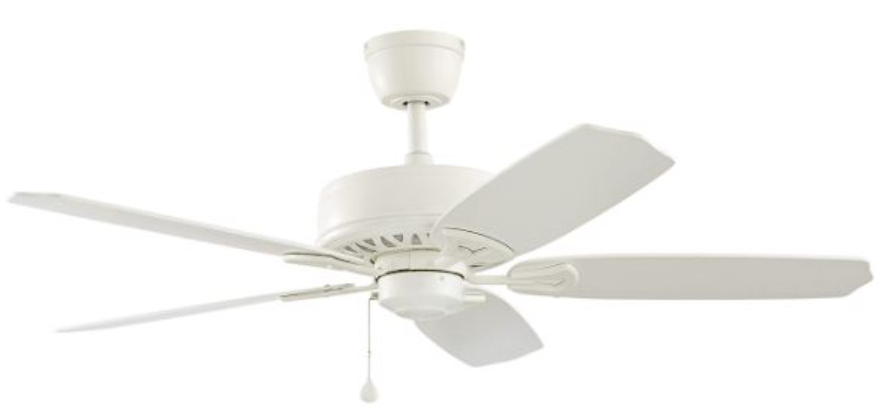
- Armitage Style: Classic flush-mount (“hugger”) design, typically 52-inch with 5 reversible blades and a simple bowl light kit. Common in White, Bronze, or Nickel. Specifically for low ceilings (under 8-9 feet).
- Mazon Style: Modern, minimalist flush-mount, often 44-inch with only 3 sleek blades and an integrated LED light module. Usually includes a remote. Also for low ceilings.
- Calera Style: Simple, functional design often sold without a light kit (but adaptable). Frequently features weather-resistant ABS blades and may be Damp or Wet rated for outdoor use. Common in Bronze, White, Black.
- Bellevue Style: Often represents a transitional or mildly contemporary downrod-mount fan, perhaps with clean lines and finishes like brushed nickel.
- Tilghman Style: Known for its tropical look featuring palm-leaf shaped blades, often in bronze finishes and typically Damp-rated for covered outdoor areas.
- Barnstaple Bay / Nautical Styles: Fans featuring design elements reminiscent of coastal or nautical themes, like lantern-style lights or weathered finishes.
- Tahoe / Rustic Styles: Designs incorporating rustic elements, possibly heavier wood-look blades or darker, textured finishes.
- Saratoga II Style: A larger (often 60-inch), more ornate traditional fan with a decorative flywheel housing design, powerful airflow, integrated light, and usually includes a remote. For large indoor rooms only (Dry rated).
- Twin Breeze II Style: The distinctive dual-head fan with adjustable arms, offering wide air coverage for very large spaces and often Damp-rated.
- Coastal Creek / Builder’s Series Style: Represents the common, affordable “builder standard” 52-inch downrod fan with 5 reversible blades, pull chains, and a basic included light kit (often E12 bulbs).
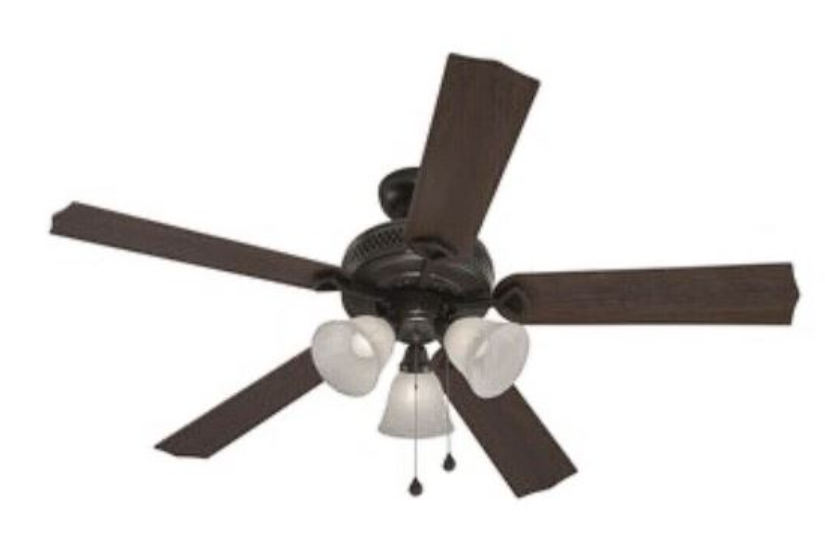
Identifying your fan’s general style and key features (size, mount type, rating) can help guide your search for compatible universal parts or appropriate troubleshooting advice, even if the exact model name or number is elusive.
Conclusion: Navigating Your Discontinued Harbor Breeze Fan
Owning an older or discontinued Harbor Breeze ceiling fan means facing certain challenges when it comes to finding specific information or replacement parts. As these Lowe’s store-brand models leave the market, dedicated support and the availability of exact OEM components typically diminish rapidly.
The key strategies for maintaining or repairing these fans involve:
- Identifying your exact Model Number (from the motor housing sticker) to aid any search.
- Persistently searching online for instruction manuals (Lowes.com archives, search engines, forums), while accepting they may not be findable.
- Focusing repair efforts on issues solvable with standard generic or universal compatible parts, especially common electrical components like capacitors and pull chain switches.
- Understanding that finding compatible universal remotes requires purchasing a kit (remote + receiver) and verifying fit/compatibility.
- Accepting that replacing model-specific parts like blades, arms, globes, motors, or mounting hardware often requires scouring the used/salvage market (eBay.com) for identical models being parted out, or is simply impractical. Careful measurement is key if attempting to fit universal globes.
- Realistically assessing the cost vs. benefit of repair. For major issues (especially motor failure) or unavailable specific parts on older Harbor Breeze fans, replacing the entire unit with a new fan is frequently the most sensible, cost-effective, and safest path forward in the US market.
While basic troubleshooting and replacement of generic parts can keep many older fans running, be prepared for the limitations inherent in supporting discontinued store-brand products and prioritize safety in all electrical work.